AutoCad


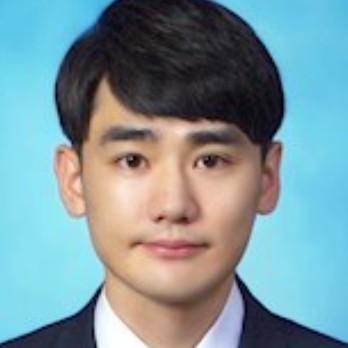
Kyeong-soo Jung
Facility Management Specialist
Suwon
Summary
Dynamic engineering professional with an M.S. in Industrial Engineering and extensive experience at Hanseong Plant Engineering. Adept in the design and modeling of industrial systems, including high-efficiency steam plasma and utility infrastructure. Proven track record in managing complex projects, ensuring safety compliance, and leading large-scale teams of 80+. Skilled in piping, utility systems, and vendor support, with a strong focus on risk assessment and technical innovation.
Overview
1
1
Language
2
2
Certifications
5
5
years of professional experience
8
8
years of post-secondary education
Work History
Assistant Manager of Engineering Design Team
Hanseong Plant Engineering
08.2021 - Current
• Managed 20+ large-scale industrial equipment projects, developing strong expertise in system design, layout, and utility integration.
• Designed and implemented process equipment including reactors and heat exchangers, with a strong understanding of fluid, thermal, and utility systems.
• Led full P&ID development for complex systems, ensuring accurate utility flow design and seamless integration with on-site installation requirements.
• Coordinated with cross-functional teams including fabrication, installation, and clients to support efficient equipment setup and commissioning.
• Ensured compliance with safety and regulatory standards (KOSHA, KEA), applying risk assessment and safety considerations throughout design and installation phases.
Education
Master of Science - Industrial Engineering
Ajou University
Suwon, South Korea 03.2017 - 02.2019
Bachelor of Science - Mechanical Engineering
Ajou University
Suwon, South Korea 03.2011 - 02.2017
Skills
Design & Modeling
Vendor & Procurement Support
Piping & Utility System
Vendor & Procurement Support
Software
SolidWorks
Inventor
Catia
Certification
Industrial Engineer Mechanical Design
Timeline
Assistant Manager of Engineering Design Team
Hanseong Plant Engineering
08.2021 - Current
Industrial Engineer Mechanical Design
12-2020
Master of Science - Industrial Engineering
Ajou University
03.2017 - 02.2019
Computer Specialist Level 2
07-2015
Bachelor of Science - Mechanical Engineering
Ajou University
03.2011 - 02.2017
Cover Letter
1. Motivation and Career Vision: Contributing to Stable Operations at ASM
ASM is a global leader in the semiconductor industry, setting standards through its advanced ALD technology. To ensure these systems operate at peak performance, the stability of utility infrastructure—such as high-purity gas supply and precise temperature control—is essential.
With my experience in designing and building plasma system infrastructure during my graduate studies, as well as my professional background in plant engineering, I am motivated to contribute to stable and reliable facility operations at ASM. I aim to support “Zero Downtime” by improving system reliability and to grow into an engineer who enhances operational efficiency through data-driven optimization and proactive risk management.
2. Professional Expertise: From Design to Implementation
My key strength lies in bridging system design with real-world implementation, particularly in utility systems.
Infrastructure Experience:
During my Master’s program, I participated in a KEPCO-funded project to develop a steam plasma system. I was responsible for designing and constructing utility lines, including cooling water, gas supply, and exhaust systems. By optimizing thermal insulation and fluid flow, I improved hydrogen production efficiency from 40% to 55%. This experience helped me understand how small changes in utility conditions can significantly impact overall system performance.
Design & Optimization Experience:
At Hanseong Plant Engineering, I worked on P&ID-based design and layout optimization for chemical plant equipment. In the Poongsan project, I addressed severe space constraints by adjusting nozzle positions and flange directions, ensuring both installation feasibility and ease of maintenance. This experience strengthened my ability to design efficient layouts in complex environments.
3. Teamwork and Leadership: Collaborating Across Functions
The role of a Facility Management Specialist requires close collaboration with multiple stakeholders, including Production, R&D, EHS, and external vendors.
As the Vice President of an automotive engineering club, I led a team of over 80 members and participated in the development of five vehicles. By coordinating tasks across different functions and managing project timelines, I developed strong communication and problem-solving skills.
In addition, during my time at Hanseong, I incorporated feedback from on-site personnel into design improvements to reduce construction errors. These experiences taught me the importance of clear, field-oriented communication, which I will apply to support stable facility operations at ASM.
4. Challenges and Achievements: A Practical Problem-Solving Approach
One of the most meaningful challenges I faced was the development of a steam plasma-based energy system during my graduate studies.
Starting from a laboratory with no existing infrastructure, I designed and installed safety systems for MW-class equipment, along with cooling and utility lines. When hydrogen production efficiency plateaued, I conducted a root-cause analysis and identified heat loss within the reactor as a key issue. By improving insulation and optimizing flow conditions, I successfully increased efficiency to 55%, exceeding the initial target.
This experience strengthened my ability to analyze problems, implement practical solutions, and deliver measurable results—skills that I will apply to maintaining and improving ASM’s facility operations.