

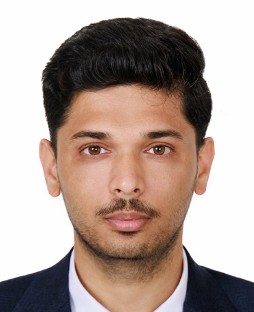
Prabhakaran Sampath
Postdoctoral Researcher
Jinju
Summary
Research-focused scientist with strong expertise in computational and data-driven materials research, combining rigorous methodology, quantitative analysis, and mechanistic scientific writing. Experienced in working across theory–experiment interfaces, contributing actionable insights to multidisciplinary teams. Demonstrated ability to design and execute complex research workflows, adapt to evolving project objectives, and deliver reproducible, high-impact results through analytical rigor and technical depth.
Overview
8
8
years of professional experience
3
3
Languages
Work History
Postdoctoral Researcher
Korea Institute of Ceramic Engineering and Technology
Jinju, Gyeongsamnam-do
02.2025 - Current
Led the development of ML-driven virtual engineering and reverse-engineering frameworks to predict area-specific resistance (ASR) in solid oxide fuel cells (SOFCs), integrating composition, structure, and performance data under physics-informed constraints.
Designed integrated DFT–ML workflows for high-entropy oxide (HEO) surfaces, identifying composition–structure descriptors governing catalytic activity, stability, and reversibility in RSOFC electrodes.
Performed first-principles simulations on hybrid quantum dots for energy storage and conversion, analyzing electronic structure, charge redistribution, and structure–function relationships.
Conducted DFT-based investigations of K-montmorillonite ceramic catalysts, correlating defect chemistry and charge-density redistribution with experimentally observed catalytic behavior.
Executed mechanistic DFT analysis of CuS@Cu heterostructures to support experimental CO₂ reduction studies toward C₂ products (C₂H₄), focusing on CO₂/CO adsorption, early C–C coupling pathways, vacancy-induced electronic effects, and interfacial charge transfer.
Postdoctoral Researcher
Jeonbuk National University
Jeonju, Jeollabuk-do
09.2023 - 01.2025
Conducted DFT-based mechanistic modeling of catalytic materials for HER, OER, ORR, and CO₂RR, supporting interdisciplinary experimental efforts through electronic-structure, adsorption, and reaction-energetics analyses.
Modeled Zn–Ni–N–doped carbon catalysts (pyrrolic, pyridinic, and pyrazolic configurations) to identify active-site motifs and reaction energetics governing bifunctional OER/ORR performance.
Analyzed Ni–N₃–doped carbon surfaces for CO₂RR, evaluating adsorption behavior, charge transfer, and electronic descriptors linked to catalytic selectivity.
Applied surface crystallography modeling to demonstrate how transitions from low-index (111) to high-index (220) facets enhance Au electrocatalyst activity toward CO₂ reduction.
Translated first-principles insights into synthesis-relevant design guidelines, aligning atomistic predictions with practical materials development for electrochemical energy-conversion systems.
Doctoral Research Scholar
Jeonbuk National University
Jeonju, Jeollabuk-do
03.2020 - 09.2023
Performed DFT-based mechanistic studies on electrocatalysts for water splitting and electrochemical energy conversion, integrating electronic-structure analysis with experimental validation.
Elucidated structure–activity relationships in Fe- and P-doped WS₂ monolayers, identifying bifunctional HER/OER active sites and doping-induced electronic effects.
Modeled surface-modified CoMoSe₂ systems, demonstrating that partial oxygenation enhances trifunctional HER/OER/ORR activity through charge redistribution and optimized adsorption energetics.
Designed oxygen-incorporated NiSe₂ surfaces using first-principles methods, identifying catalytically active sites and reaction energetics relevant to water-splitting performance.
Linked atomistic predictions with experimental synthesis and characterization of hierarchical 3D oxygenated Co₁₋ₓMoₓSe₂ nanosheets, supporting performance optimization in water splitting and Zn–air batteries.
Provided theoretical interpretation of HER, OER, and ORR mechanisms in close collaboration with interdisciplinary teams, guiding catalyst optimization and electrochemical performance assessment.
Master’s Researcher
Jeonbuk National University
Jeonju, Jeollabuk-do
03.2018 - 02.2020
Synthesized and electrochemically evaluated electrocatalysts for hydrogen evolution and water electrolysis using standard electrochemical testing protocols.
Analyzed activity, stability, and durability trends through electrochemical measurements, providing performance benchmarks to guide materials optimization.
Developed and optimized catalyst materials for Zn–air batteries, linking electrochemical behavior to energy-storage performance improvements.
Education
Ph.D. - Nano Convergence Engineering
Jeonbuk National University
Jeonju, South Korea08.2023
M.E. - BIN Convergence Technology
Jeonbuk National University
Jeonju, South Korea02.2020
B.E. - Mechanical Engineering
Sakthi Engineering College, Anna University
Coimbatore, India05.2016
Skills
First-Principles & Atomistic Modeling
Density Functional Theory (DFT) using VASP
Electronic-structure analysis: DOS/PDOS, band structures, charge density, Bader charge analysis
Reaction energetics and mechanisms: adsorption energies, surface stability, defect chemistry, NEB reaction pathways
Structure–property relationships in catalytic and electrochemical materials
Catalysis & Energy Materials (Theory–Experiment Interface)
Mechanistic modeling of CO₂ conversion (CO₂RR, CO₂ activation), HER, OER, and ORR
Perovskites, spinels, single-atom catalysts, and metal/oxide heterostructures
Atomistic validation of experimentally proposed mechanisms using spectroscopic and electrochemical evidence
Data Analysis & Scientific Visualization
Python-based scientific data analysis and workflow automation
Visualization and structural analysis using VESTA, Materials Studio, Origin
Interpretation of XPS, XRD, SEM/TEM, cyclic voltammetry, and electrochemical performance data
Close collaboration with experimental teams for theory-guided catalyst design
Co-supervision and mentoring of Master’s students
Author of 50 peer-reviewed SCIE publications with strong expertise in mechanistic and interdisciplinary scientific writing
References
- Prof. Do Hwan Kim, dhk201@jbnu.ac.kr, +82-63-270-2816, Jeonbuk National University, Jeonju, Republic of Korea, 561-756, Department of Science Education, Google scholar: https://scholar.google.com/citations?user=NhhhaLUcAAAAJ&hl=en
- Prof. Myung Hwa Kim, myungkim@ewha.ac.kr, +82-2-3277-4131, Ewha Womans University, Republic of Korea, Department of Chemistry & Nanoscience, ScholarGPS: https://scholar.google.com/scholars/9594543336310/myung-hwa-kim
- Dr. Hyunseok, Ko, hko@kicet.re.kr, +82-10-2835-4671, Korea Institute of Ceramic Engineering and Technology, Jinju, Republic of Korea, 52851, Senior Researcher, Division of AI Convergence Research, Google scholar: https://scholar.google.com/citations?user=sRlg1osAAAAJ&hl=en
Timeline
Postdoctoral Researcher
Korea Institute of Ceramic Engineering and Technology
02.2025 - Current
Postdoctoral Researcher
Jeonbuk National University
09.2023 - 01.2025
Doctoral Research Scholar
Jeonbuk National University
03.2020 - 09.2023
Master’s Researcher
Jeonbuk National University
03.2018 - 02.2020
M.E. - BIN Convergence Technology
Jeonbuk National University
B.E. - Mechanical Engineering
Sakthi Engineering College, Anna University
Ph.D. - Nano Convergence Engineering
Jeonbuk National University